Exposure-Induced Fibrosis
Targeting fibrosis triggered by chemical, radiation, burn pit, and toxic exposures, an area of significant unmet need in both clinical and biodefense settings.
Understanding the disease
What is exposure-induced fibrosis?
Exposure-induced fibrosis is a serious and potentially life-threatening condition in which fibrosis, the excessive buildup of scar tissue, develops as a direct consequence of exposure to harmful environmental agents. These agents include chemical hazards, ionizing radiation, burn pit emissions, and biological or toxic substances encountered in occupational, military, or disaster settings.
Unlike idiopathic fibrosis, where the cause is unknown, exposure-induced fibrosis has an identifiable triggering event. However, the resulting biological cascade is equally destructive: tissue damage initiates a pro-fibrotic environment that, if left unchecked, leads to progressive and irreversible organ dysfunction across the lungs, skin, kidneys, and other vital organs.
Currently approved therapies can only slow the progression of fibrosis, they cannot stop it or reverse the damage already done. This represents a critical unmet need, particularly for military veterans, first responders, and civilian populations affected by environmental disasters
Unlike idiopathic fibrosis, where the cause is unknown, exposure-induced fibrosis has an identifiable triggering event. However, the resulting biological cascade is equally destructive: tissue damage initiates a pro-fibrotic environment that, if left unchecked, leads to progressive and irreversible organ dysfunction across the lungs, skin, kidneys, and other vital organs.
Currently approved therapies can only slow the progression of fibrosis, they cannot stop it or reverse the damage already done. This represents a critical unmet need, particularly for military veterans, first responders, and civilian populations affected by environmental disasters
Exposures We Address
Sources of Fibrosis-Inducing Exposure
Our research program is exploring the application of our platform technology across multiple categories of harmful environmental exposure.
Chemical Exposure
Exposure to toxic industrial chemicals, nerve agents, and hazardous materials can trigger a sustained pro-fibrotic response in lung, skin, and systemic tissue.
Burn Pit Exposure
Military personnel exposed to open burn pit smoke face elevated risk of respiratory and systemic fibrotic disease due to complex mixtures of combustion byproducts and particulates.
Radiation-Induced Fibrosis
Ionizing radiation from therapeutic, occupational, or accidental sources, damages tissue architecture and activates fibrotic repair pathways that can persist long after the initial exposure.
Biological and Toxin Exposure
Certain biological agents and environmental toxins can induce organ-level inflammation followed by progressive fibrosis, representing a significant area of biodefense concern.
Our Research Efforts
Advancing TTX-001 Toward Clinical Application
TTX-001 is a discovery/pre-IND stage platform with a growing evidence base supporting its advancement toward clinical trials across multiple areas of interest.
Prophylactic and Therapeutic Potential
Preclinical research is exploring both preventive and treatment applications of TTX-001, with the goal of addressing fibrosis before it becomes established as well as reversing damage already underway, a critical capability in acute exposure scenarios.
Growing Preclinical Evidence Base
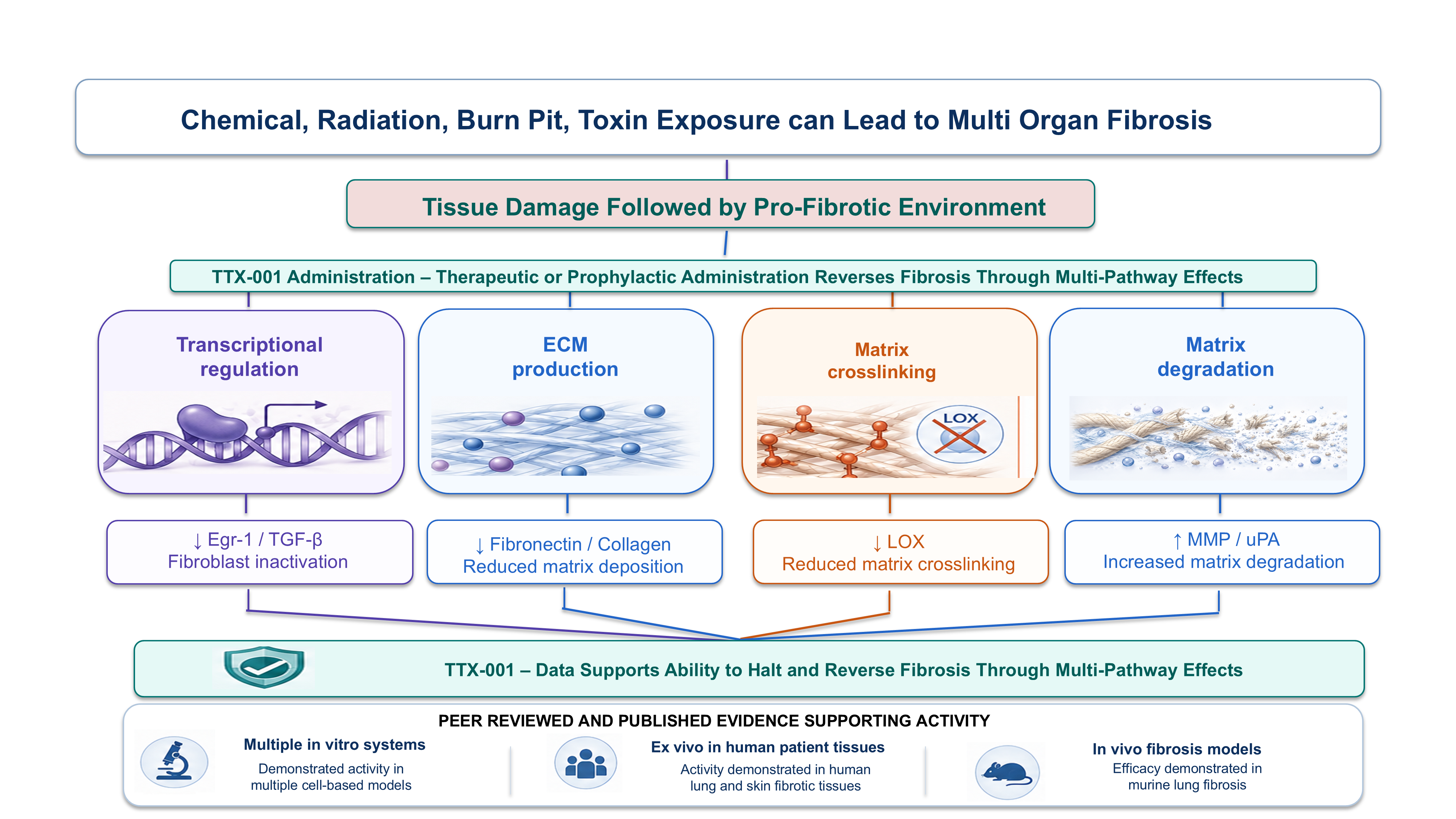
Activity has been demonstrated in multiple cell-based models, in human lung and skin fibrotic tissue ex vivo, and in murine lung fibrosis models, supporting advancement of the platform toward clinical investigation in exposure-induced fibrosis.
Designed for Practical Administration
TTX-001 is a peptide being developed with oral bioavailability as a target route of administration, with the goal of enabling practical deployment across the range of settings where exposure-induced fibrosis presents as a clinical challenge.
How TTX-001 Works
Mechanism of Action
TTX-001 is a multi-pathway, orally bioavailable peptide designed to shift a pro-fibrotic gene expression profile to an anti-fibrotic profile, tipping the balance in favor of fibrosis resolution.
Learn More About Our Science
Discover the platform technology and research approach driving our exposure-induced fibrosis program forward.
Important Notice
We are an early stage company developing a research pipeline of products addressing fibrotic diseases. The product candidates described on this website are in various stages of development and have not been approved or determined to be safe or effective by the U.S. Food and Drug Administration or any comparable regulatory authority. Nothing on this website is intended to suggest the safety, efficacy, or commercial availability of any product candidate in the United States.